
Doctor Consultation Booking System: The Smart Way to Schedule Appointments
If you’ve ever tried booking a doctor’s appointment the old-fashioned way, you probably remember the familiar frustrations — long hold times on the phone, mismatched schedules, unanswered calls, or the sinking feeling of arriving at a clinic only to discover a long queue. For years, patients accepted this as “just how healthcare works,” even though almost every other part of life had become easier, faster, and more digital.
But in 2025, the healthcare landscape looks completely different. Clinics are busier than ever, patients are more informed, and people expect the same convenience from healthcare that they get from ordering groceries or booking a cab. In the middle of this shift, one solution has quietly become the backbone of modern clinics: the doctor consultation booking system.
This technology didn’t arrive with flashy promises. It grew slowly, solving one problem at a time until clinics realized they couldn’t imagine running their schedules without it. Today, it is one of the most essential tools in making healthcare smoother for both patients and doctors. And as people increasingly choose to book a doctor online, this system has become the smartest, simplest, and most dependable way to manage appointments.
Why Traditional Appointment Booking No Longer Works
Gone are the days when calling a clinic during business hours was the only way to secure a visit. Life today doesn’t pause around hospital timings. People work long hours, parents juggle school schedules, and others simply forget to call until the phones are already switched off.
This led to a cycle of inconvenience:
Patients making multiple calls just to confirm a slot.
Front-desk staff overwhelmed with endless rescheduling.
Doctors facing empty slots one moment and overbooked evenings the next.
Missed appointments derailing clinic workflow and revenue.
Everyone was doing their best, yet the system repeatedly fell apart.
A doctor consultation booking system replaces this outdated method with a centralized, digital scheduling experience that doesn’t depend on phone lines or office hours. It respects both the doctor’s time and the patient’s routine — and that balance is exactly what modern healthcare needed.
What a Doctor Consultation Booking System Really Does
If someone unfamiliar sees the term, they might assume it’s just a digital calendar. But it is much deeper — and far smarter — than that.
Think of it as a personal scheduling assistant that works around the clock.
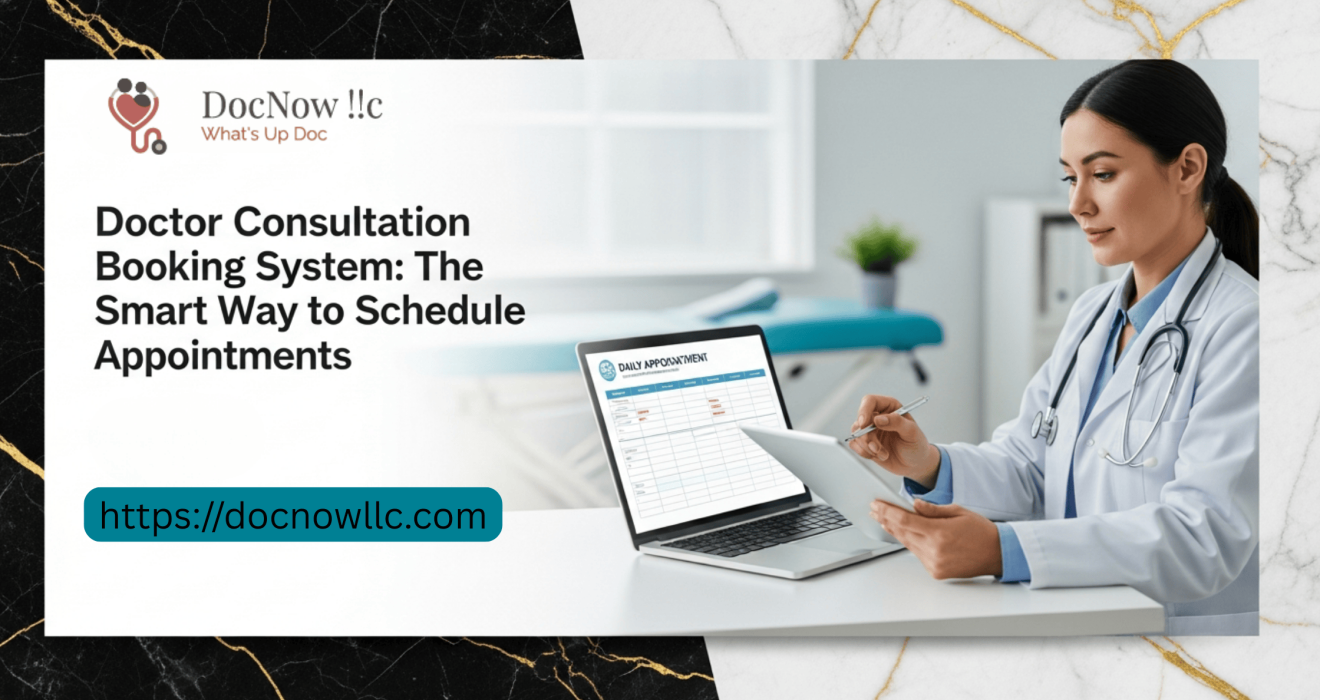
Patients can open the app anytime, scroll through available dates, choose a slot that fits their day, and confirm instantly. No waiting. No calling. No miscommunication. When a patient books, the doctor sees the appointment in real time. If the doctor updates their availability, patients see the change immediately.
The system ties together information that once floated around in notebooks and memories: patient history, appointment type, consultation mode (virtual or in-person), follow-up needs, and even reminders.
The biggest shift?
Healthcare finally adapts to the patient’s world — not the other way around.
The Emotional Relief for Patients
Booking an appointment shouldn’t feel like a task that demands energy you already don’t have. Yet for many people, especially when they’re unwell, even calling a clinic feels exhausting.
With the ability to book a doctor online, patients feel a sense of relief.
A parent can schedule a pediatric appointment at midnight when their child finally falls asleep.
A working professional can confirm a slot during a coffee break instead of losing work hours.
An elderly patient who forgets clinic timings can check availability with a simple tap.
The experience becomes less about “Can I get someone to answer the phone?” and more about “I can get care whenever I need it.”
This emotional shift is powerful. It builds trust, reduces anxiety, and makes people more proactive about their health.
The Practical Benefits for Clinics
On the clinic side, the transformation is even more visible — and often surprising.
When appointments are handled digitally, front-desk chaos diminishes.
Staff no longer field constant scheduling calls.
Doctors get a clearer picture of their day and workload.
Double bookings nearly disappear.
No-shows decrease because patients receive automatic reminders.
Instead of flipping pages in an appointment book, the clinic operates with a flow that feels intentional and organized.
Doctors also appreciate having more predictable schedules. They can block off times for emergencies, adjust availability, or manage virtual and in-person visits without risking confusion. The system respects their boundaries — something that deeply matters in a profession already stretched thin.
A Better Way to Manage Follow-Ups
One of the quiet failures of traditional healthcare is the follow-up process. Patients forget. Clinics get busy. Doctors lose track. As a result, many conditions worsen simply because the next appointment never happened.
A smart consultation booking system connects follow-ups directly to the patient’s profile. The moment a doctor recommends a return visit, the system guides the patient to schedule it. If they forget, automated reminders nudge them.
Suddenly, continuity of care stops depending on memory — and becomes something the system handles effortlessly.
When “Booking a Doctor Online” Becomes a Lifeline
For some people, online booking isn’t about convenience — it’s about access.
People in rural areas often travel hours for basic care. A digital scheduling system helps them secure an appointment before making the trip, saving time and effort.
Patients living alone find comfort in scheduling without needing assistance.
Those with social anxiety prefer booking silently instead of speaking on the phone.
People with unpredictable symptoms appreciate the ability to grab an available slot quickly.
These are real stories, real struggles, and real benefits brought by a simple shift in how appointments are managed.
How This System Helps During Emergencies and Urgent Needs
Healthcare emergencies don’t follow business hours. If someone wakes up at 3 a.m. with severe pain, they don’t want to wait until morning to call a clinic.
While virtual consultation addresses the immediate need, the booking system ensures the patient gets the earliest available appointment without delay. Many clinics also designate urgent slots that the system automatically prioritizes.
What once depended on luck — getting through on the phone at the right moment — now depends on a structured, fair, accessible digital workflow.
Streamlined Operations That Reduce Burnout
Doctors are often overwhelmed — not only by patient load but by administrative demands. When the booking process becomes automated and predictable, something subtle changes: doctors breathe easier.
They begin their day knowing exactly who they will see.
They end their day with fewer surprises.
They no longer deal with misunderstandings like “My appointment was at 2, not 3.”
This sense of order allows them to put more emotional and mental energy into what actually matters: patient care.
A well-organized clinic is not just efficient — it’s also a more humane place for both staff and patients.
The Role of Digital Records in Supporting Smart Scheduling
Modern booking systems don’t work in isolation. They often integrate with electronic patient records, creating a unified ecosystem that feels almost intuitive.
When a patient books a visit:
The doctor instantly sees their history.
The system identifies whether the appointment is a follow-up or new concern.
Consultation notes from previous visits appear automatically.
Prescriptions, allergies, and past reports are easily accessible.
This eliminates repetitive questions like:
“When was your last appointment?”
“What medications are you taking?”
The flow becomes more natural. The conversation becomes more meaningful. The care becomes more precise.
A Clinic That Runs Smoothly Feels Different
If you’ve ever sat in a disorganized waiting room — people crowding, numbers being called repeatedly, staff running between desks — you know how stressful it can be.
Now imagine a clinic powered by a doctor consultation booking system:
Patients arrive on time because they received reminders.
The waiting area doesn’t overflow because scheduling is spaced correctly.
Doctors start appointments without delay because records are ready.
Staff greet patients calmly instead of juggling calls and paperwork.
The environment feels lighter.
Patients feel respected.
Doctors feel supported.
The entire experience becomes more human-centered.
Building Trust Through Transparency
One of the most underestimated benefits of digital booking is the transparency it creates. Patients see available time slots clearly. There is no guessing, no “call back later,” no sense of being turned away.
They feel in control — and when patients feel in control, trust naturally grows.
A patient who easily books online is more likely to return.
A patient who receives reminders is more likely to follow medical advice.
A patient who doesn’t wait endlessly is more likely to recommend the clinic.
Trust is not built through big gestures. It’s built through small, consistent experiences — and online booking delivers those experiences effortlessly.
The Future Belongs to Clinics That Adapt Today
Healthcare is not moving backwards. Every year, patients become more tech-savvy, more selective, and more aware of their options. Clinics that rely on outdated scheduling methods eventually fall behind — not because they lack skill, but because they lack accessibility.
A modern doctor consultation booking system is more than a digital tool.
It is the new expectation.
It is the new standard.
And soon, it will be the bare minimum patients look for.
The clinics that adopt early will stand out as organized, reliable, and patient-focused.
Those that delay will struggle to keep up with rising demands.
Conclusion
The doctor consultation booking system has transformed healthcare far beyond simple appointment scheduling. It has become a bridge between patients and providers — one that removes unnecessary barriers, reduces confusion, and brings clarity to a process that used to feel frustrating.
It gives patients freedom.
It gives doctors structure.
It gives clinics stability.
And when people can book a doctor online with ease, healthcare becomes what it should have always been: accessible, manageable, and compassionate.
This is not the future of healthcare — this is healthcare done right.